
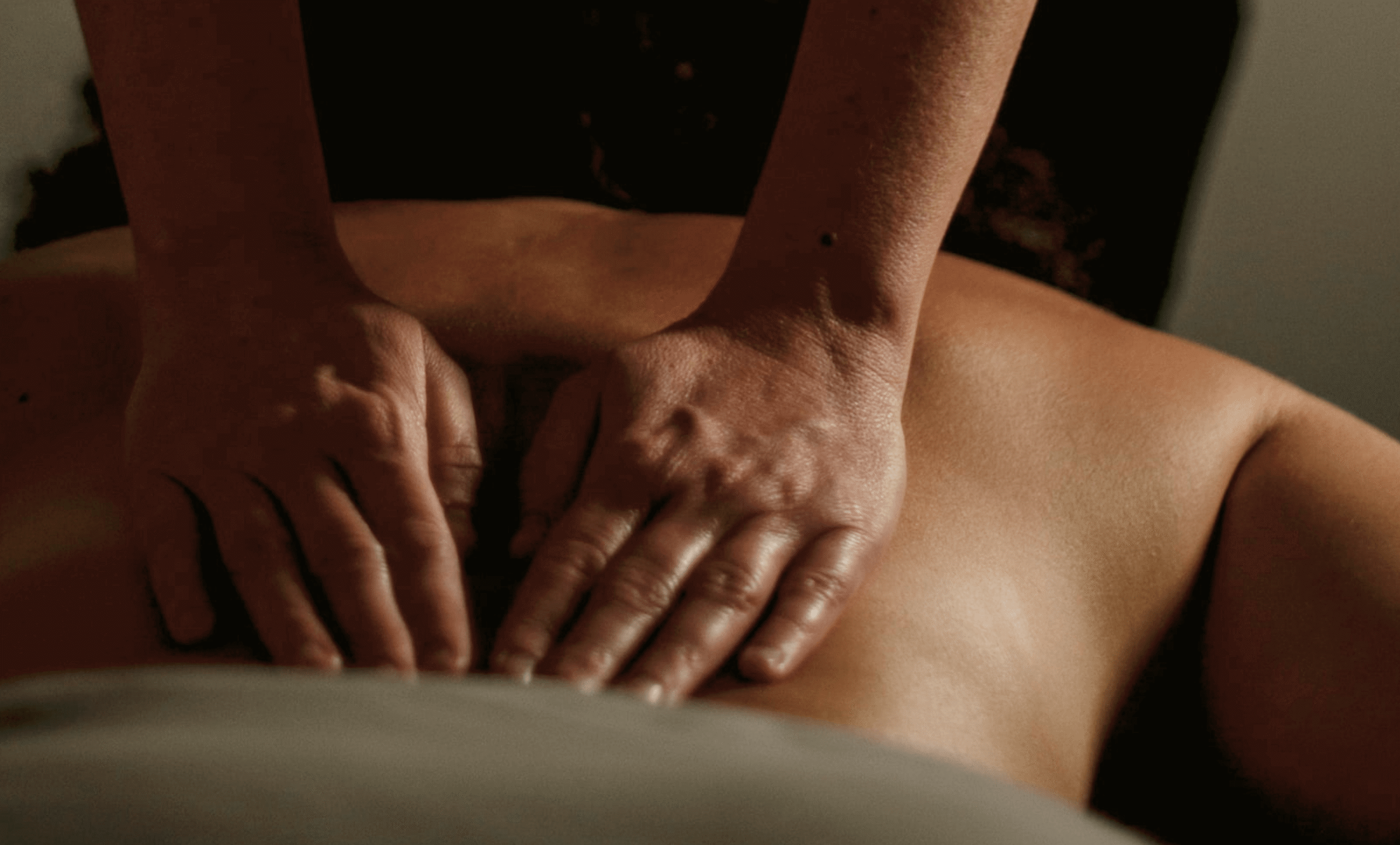
Scooters, surfing, long flights, hunching over a laptop at your villa desk. Between travel stiffness and Bali’s activity level, your lower back can go from fine to cranky fast.
Massage won’t fix structural issues or replace medical care, but it can help release muscle tension, improve mobility, and provide short-term relief when your back feels tight or sore. The key is knowing what pressure to request, which positioning works best for your body, and what to say to your therapist so you don’t leave more sore than you arrived.
Here’s how to get real relief: pressure that’s effective, positioning that’s comfortable, and what to communicate before your session starts. Explore body treatments in Seminyak to see your options.
Why Your Lower Back Hurts on Holiday (And Why Massage Can Help)
Lower back pain on holiday usually comes down to muscle strain and stiffness. Long flights leave you compressed in one position for hours. Scooter rides over bumpy roads jar your spine. Surfing engages your core and back extensors in ways they’re not used to. Carrying luggage, sleeping in unfamiliar beds, and spending more time sitting at cafes all add up.
Massage can help by releasing tight muscles, improving blood flow to the area, and calming your nervous system so your body stops guarding and bracing. Research suggests massage may provide short-term pain relief and improved function when added to usual care, though the evidence is still limited and results vary from person to person.
What massage can realistically do:
- Release muscle tension and tightness
- Improve range of motion and flexibility
- Provide short-term pain relief
- Support relaxation and reduce stress-related tension
What massage can’t do:
- Fix disc issues, structural problems, or injuries that need medical treatment
- Replace physiotherapy or medical care for chronic conditions
- Cure back pain permanently
If your back pain is new, severe, or accompanied by other symptoms (numbness, weakness, bowel or bladder changes), see a healthcare provider before booking a massage.
What Helps Most: The 3 Areas Therapists Often Need to Treat
Lower back pain isn’t always just about the lower back. Tightness in surrounding areas often contributes to the problem, which is why experienced therapists will work beyond the painful spot.
Glutes and hips:
Tight glute muscles (especially gluteus medius and piriformis) can pull on your pelvis and create tension in the lower back. If you’ve been sitting a lot or walking on uneven surfaces, this area often needs attention.
Upper back and QL (quadratus lumborum):
The QL runs along the side of your lower back and connects to your ribcage. When it’s tight, it can create a pulling sensation in your lower back. Upper back tension can also change your posture and shift load to your lower back.
Hip flexors and hamstrings:
Hours of sitting on flights or in cars can shorten your hip flexors, which tilts your pelvis forward and increases strain on your lower back. Tight hamstrings have a similar effect by limiting how your pelvis moves when you bend.
A good therapist will assess where your tension pattern starts and work the contributing areas, not just the spot that hurts most.
Tell us where you feel it most and we’ll tailor the session to address your specific tension pattern.
Pressure: How Firm Should You Go?
More pressure doesn’t always mean better results. If your therapist goes too deep too fast, your muscles will tense up and guard, which defeats the purpose.
Here’s a practical pressure scale to help you communicate what you need:
3 to 4 out of 10:
Light to moderate pressure. Focuses on relaxation and calming your nervous system. Good if your back pain is partly stress-related or if you’re very sore and can’t handle deeper work yet.
5 to 7 out of 10:
“Productive pressure.” Strong enough to release tight muscles, but tolerable enough that you can keep breathing normally and stay relaxed. This is usually the sweet spot for lower back work.
8 to 10 out of 10:
Often too much. At this level, most people start bracing, holding their breath, or tensing up, which makes the muscles harder to release. It can also lead to next-day flare-ups or excessive soreness.
What to expect after:
Mild soreness is normal after massage, especially if your therapist used deeper pressure or worked on very tight areas. This usually feels like post-exercise soreness and resolves within a few hours to a day. If you’re significantly more sore or your pain has worsened, the pressure was likely too much.
Copy-ready line to use with your therapist:
“Let’s keep pressure around a 6 out of 10 and adjust if my muscles start to brace.”
Your therapist should check in regularly during the session. If something doesn’t feel right, speak up immediately rather than waiting until the end.
Positioning: The #1 Comfort Upgrade for Lower Back Pain
Table positioning can make or break your massage experience, especially if lying flat aggravates your back. Most therapists default to face-down (prone) positioning, but there are other options that might work better for you.
Prone (Face Down)
This is the standard massage position, but it can feel uncomfortable if you have lower back sensitivity. When you lie face down on a flat table, your lower back can arch (especially if the face cradle pulls your head down), which compresses the lumbar spine.
How to make it more comfortable:
Ask for a bolster or pillow under your hips or ankles. This reduces the arch in your lower back and takes pressure off the area. Many therapists do this automatically, but if yours doesn’t, it’s fine to request it.
Supine (Face Up)
Lying on your back can work well for lower back massage if your knees are supported. A bolster or pillow under your knees prevents your back from arching and keeps your pelvis in a neutral position.
Your therapist can work your hip flexors, abdominals, and front-body muscles that contribute to back tension from this position. It’s also easier to breathe and communicate when you’re face up.
Side-Lying
This is often the most comfortable position for people with lower back pain, and it’s essential if you’re pregnant or have breathing issues that make lying face down difficult.
In side-lying position, you’re on your side with pillows supporting your head, top arm, and top leg. Your spine stays neutral, there’s no compression, and your therapist can still access your entire back, hips, and glutes.
Copy-ready question to ask:
“Can we try side-lying if lying face down aggravates my lower back?”
Good therapists are trained in multiple positioning options. Don’t feel like you need to stay in one position if it’s uncomfortable.
What to Ask Your Therapist: 10 Questions That Get Better Results
The better you communicate before and during your session, the better your results. Here’s what to say:
Questions About Your Goals
“Can we focus on my lower back, hips, and glutes so the tension doesn’t bounce back tomorrow?”
This tells your therapist where to spend the majority of the session and signals that you want surrounding areas addressed, not just the painful spot.
“I’ve been sitting a lot on flights and at cafes. Can you check my hip flexors and hamstrings too?”
Helps your therapist understand the context of your pain and what might be contributing to it.
Questions About Pressure and Feedback
“What’s your pressure check-in system?”
Some therapists ask regularly, others wait for you to speak up. Knowing their approach helps you decide how proactive you need to be.
“Can we keep the pressure around a 6 out of 10, and adjust if I start to tense up?”
Establishes clear expectations from the start and gives your therapist permission to check in and adjust.
“If I tense up or brace, can we reduce pressure and go slower on that area?”
Good therapists already do this, but saying it explicitly gives you an easy way to redirect mid-session without feeling awkward.
Questions About Positioning
“Can we add a bolster under my hips or try side-lying if I feel compression in my lower back?”
Shows you know positioning options exist and you’re comfortable advocating for your comfort.
“Is it okay to switch positions midway through if something isn’t working?”
The answer is almost always yes, and asking this upfront makes it easier to speak up later.
Questions About Safety and Sensitivities
“I bruise easily. Can we avoid aggressive stripping techniques and use slower, sustained pressure instead?”
If you know you’re prone to bruising or have sensitive skin, this helps your therapist adjust their technique.
“What soreness is normal after this type of session, and what would be a red flag?”
Your therapist can tell you what to expect (mild soreness, fatigue) versus what would be concerning (severe pain, numbness, worsening symptoms).
What to Book in Seminyak (Simple Decision Guide)
Here are your main options depending on how much time you have and what kind of session you need.
Option A: Full-Body Massage with Lower Back Focus
Mello Signature Massage
Duration: 45 minutes (IDR 500K), 60 minutes (IDR 650K), or 90 minutes (IDR 980K)
This is Mello’s most requested massage and it’s fully customisable. Your therapist will use a combination of techniques including deep tissue, trigger point therapy, and myofascial release, adjusted to your needs.
You can request extra time on your lower back, hips, and glutes while still getting full-body work to address contributing tension. The 90-minute session gives the most flexibility for thorough lower back treatment plus full-body relaxation.
Best for: Lower back pain that’s part of a larger tension pattern (tight shoulders, stiff hips, post-flight stiffness).
Option B: Short on Time
If you can’t commit to a full massage but need some relief, our single treatments offer targeted work in 30 or 60 minutes:
Foot Reflexology Massage (30 mins IDR 275K, 60 mins IDR 500K): Supports circulation, calms the nervous system, and can help reset your energy if your back pain is stress-related.
Neck + Shoulders Massage (30 mins IDR 275K, 60 mins IDR 500K): If your lower back pain is connected to upper body tension or poor posture.
These aren’t lower-back specific, but they can be helpful if your tension pattern is full-body or travel-related and you need a quick reset.
Option C: The ‘Reset Day’
If you’re looking for a complete restoration experience, our monthly exclusive packages combine massage with other treatments for better value and longer sessions.
Best for: Those who want a full spa day and have time to invest in comprehensive care.
Book your treatment online or message us with your main tension points so we can recommend the right session length and approach.
Aftercare: What to Do the Same Day
After your massage, your body is still processing the work. Here’s how to support recovery:
Hydrate:
Drink plenty of water, especially in Bali’s heat. Massage can release metabolic waste products that need to be flushed out.
Move gently:
Light walking, easy stretching, or a gentle swim can help rather than staying completely still. Avoid intense workouts, heavy lifting, or activities that strain your back if you’re feeling sore.
Rest if you need it:
Some people feel energised after massage, others feel tired. If you’re fatigued, that’s normal. Your nervous system is recalibrating.
Apply heat or ice:
If your lower back feels tight, gentle heat (warm shower, heat pack) can help. If you have inflammation or tenderness, ice might be better. Ask your therapist which they recommend for your specific situation.
What’s normal vs what’s not:
Mild muscle soreness for a few hours to a day is normal, especially after deeper work. Feeling relaxed, slightly tired, or experiencing improved range of motion are all positive signs.
Red flags (seek medical help if you experience):
- Severe or worsening back pain after massage
- New numbness, tingling, or weakness in your legs
- Bowel or bladder changes
- Unexplained fever, night sweats, or weight loss
- Pain that doesn’t improve with rest or gets worse at night
These symptoms are rare after massage but could indicate something that needs medical attention.
FAQ
What type of massage is best for lower back pain?
There’s limited research comparing different massage types for back pain, but studies suggest massage in general may provide short-term relief when added to usual care. Deep tissue, trigger point therapy, and myofascial release are commonly used for lower back tension. At Mello, the Signature Massage incorporates these techniques and can be customised to focus on your lower back and surrounding areas. The best approach depends on your specific tension pattern, pain level, and what your body responds to.
Should deep tissue massage hurt?
No. Deep tissue should feel intense but not painful. A “productive pressure” (around 5 to 7 out of 10 on a pressure scale) is strong enough to release tight muscles but tolerable enough that you can keep breathing and stay relaxed. If you’re bracing, tensing up, or experiencing sharp pain, the pressure is too much and your muscles won’t release properly. Communicate with your therapist throughout the session.
What if lying face down hurts my back?
Ask for a bolster under your hips or ankles to reduce the arch in your lower back, or request side-lying positioning instead. Side-lying keeps your spine neutral with no compression and is often the most comfortable option for people with lower back sensitivity. Good therapists are trained in multiple positions and can adjust based on what your body needs.
Is it normal to be sore after a massage?
Mild muscle soreness for a few hours to a day after massage is normal, especially if your therapist used deeper pressure or worked on very tight areas. It usually feels similar to post-exercise soreness and resolves on its own. Severe pain, worsening symptoms, or soreness that lasts more than a couple of days isn’t typical and could mean the pressure was too intense.
Can you focus on my lower back during a full-body massage?
Yes. The Mello Signature Massage is fully customisable, and you can request that your therapist spend more time on your lower back, hips, and glutes while still addressing the rest of your body. Let your therapist know at the start of the session where you feel the most tension and they’ll adjust the time distribution accordingly.
When should I not get a massage for back pain?
Avoid massage if you have severe, sudden-onset back pain with no clear cause, active infection or fever, unexplained bruising or bleeding, or if your pain is accompanied by numbness, weakness, or bowel/bladder changes. If you have a herniated disc, fracture, or other diagnosed spinal condition, check with your healthcare provider before booking. Massage can help with muscle tension and minor strain, but it’s not appropriate for all types of back pain.
How do I book a massage in Seminyak?
You can book online through our website at mellospa.co, or contact our team via phone (+62 811 2890 8080), email (info@mellospa.co), or WhatsApp. Let us know you’d like a lower back focus and we’ll help you choose the right treatment and session length.
Ready to Release Lower Back Tension in Seminyak?
The winning combination is right pressure (strong but manageable), right positioning (comfortable for your body), and treating the supporting muscles (not just the spot that hurts).
When you know what to ask for and how to communicate your needs, you get safer, more effective treatment that actually helps instead of leaving you sore or disappointed.
Whether you need a full-body reset with extra attention to your lower back or a targeted session to address specific tension, Mello’s massage treatments are customised to your body and goals.
Get in touch with our team to book and request a lower back focus, or explore our body treatments to see all available options.